Posts

Is Indoor Solar the Answer for IoT Sensor Power?

Image
For IoT sensors to operate reliably in indoor environments, the choice of power supply method is critical. Especially in locations where maintenance is challenging or battery replacement is costly, solutions that enable self-generated power are gaining attention. Among these, indoor solar (Indoor PV) is one of the most promising options according to many experts. Advantages of Indoor Solar Continuous Power Supply – In an office environment with 200–400 lux illumination, it can consistently generate 15–35 μW/cm² of power. Reduced Maintenance Costs – Longer battery replacement or recharge cycles lead to significant long-term savings. Eco-Friendly – Reduces fossil fuel-based electricity usage and contributes to lower carbon emissions. Limitations and Considerations Output Limitations – In low-light or shaded areas, it may be difficult to secure sufficient power. Installation Location – Panels must be placed to receive the maximum possible light for optimal efficienc...

Why the Heatwave Hurt Ice Cream Sales

Image
Ice cream has always been considered a go-to summer snack. But according to recent statistics, sales of ice cream in Korea dropped by a staggering 35% in the summer of 2024 compared to the previous year. Despite the sweltering heat, why are consumers turning away from this classic cold treat? This post explores the reasons behind this unexpected market downturn. 1. The Paradox: Excessive Heat Makes Ice Cream Less Appealing It’s common sense that higher temperatures drive up ice cream sales. However, once temperatures exceed 35°C , people tend to choose faster thirst-quenching options like cold drinks or water . Ice cream is a dessert meant to be enjoyed slowly, which becomes unappealing under extreme heat. 2. Rising Production Costs: Coconut Oil, Dairy, and Sugar Ice cream producers are also dealing with significantly increased ingredient costs . Coconut oil , a key imported ingredient, is subject to volatile global prices. Combined with rising dairy and sugar costs, this has...

Differences Between IR Remote and Smart Key: From Function to Security

Image
Two of the most common wireless control technologies in our daily lives are the IR remote and the smart key for vehicles . While both allow for remote control, they differ significantly in how they function, their communication protocols, and their security mechanisms. In this post, we’ll compare these two technologies in terms of principles, usage environments, and security. 1. Difference in Communication Method IR Remotes (Infrared Remotes) transmit invisible light signals via infrared LEDs. These signals are usually modulated at 38kHz and sent in a straight line toward the receiving sensor. Smart Keys use Low Frequency (LF: 125kHz) and Radio Frequency (RF: 315MHz/433MHz) to communicate. The LF is used to detect proximity, and the RF is used to exchange encrypted authentication data with the vehicle. 2. Distance and Directionality IR Remote: Typically works up to 5–10 meters, but must be aimed directly at the receiver with no obstructions. Smart Key: ...

What Does Tangsuyuk Mean? The Origin of Its Name in Korean-Chinese Cuisine

Image
1. The Meaning Behind the Name 'Tangsuyuk (糖醋肉)' The word ‘Tangsuyuk’ is composed of Chinese characters: ‘糖 (Tang)’ means sugar (sweet), ‘醋 (Su)’ means vinegar (sour), and ‘肉 (Yuk)’ means meat . So literally, it translates to “sweet and sour meat.” Just from its name, you can infer both the flavor and the cooking method of this dish. 2. The Chinese Original: ‘Gulu Rou (咕嚕肉)’ Tangsuyuk originates from the Cantonese dish “Gulu Rou (咕嚕肉)” , a sweet and sour pork dish from Guangdong, China. It’s made by cutting pork into bite-sized pieces, deep-frying them, and coating them with a sweet and sour sauce. In Cantonese, ‘咕嚕’ implies a crispy and tangy taste, which perfectly describes the dish. 3. How Korea Reinterpreted Tangsuyuk Once introduced to Korea, Tangsuyuk was adapted to suit Korean palates. The sauce became thicker, sweeter , and a wider variety of vegetables were added, such as carrots, onions, cucumbers, and bell peppers. The batter became crispi...

Never Get Bored with Salads! Try These Themed Ideas by Day

Image
Salads are the ultimate go-to for healthy eating, but let’s face it—eating the same thing every day gets boring fast. The solution? Give each day a unique salad theme . With just a bit of planning, your daily salad can become something you actually look forward to! Monday – Mediterranean Style Ingredients: Romaine, cherry tomatoes, black olives, feta cheese, cucumber Dressing: Olive oil + balsamic vinegar + oregano Flavor: Light, refreshing, and easy on digestion Tuesday – Korean-Inspired Ingredients: Lettuce, perilla leaves, chives, grilled chicken, dried seaweed flakes Dressing: Gochujang (Korean chili paste) + sesame oil + vinegar + sesame seeds Flavor: Spicy and flavorful, appetite-boosting Wednesday – Mexican Vibes Ingredients: Corn, avocado, black beans, tomato, iceberg lettuce Dressing: Lime juice + cilantro + olive oil + salt Flavor: Creamy, tangy, and super filling Thursday – Asian Fusion Ingredients: Cabbage, bell pepp...

Highlight vs Induction: What's the Difference and Which Should You Buy?

Image
Kitchen Renovation Dilemma: Highlight vs Induction In today's kitchen appliance market, induction and highlight cooktops are commonly compared as the two major types of electric ranges. Though they look similar, they differ significantly in how they operate, their performance, safety, cost, and cookware compatibility. This article breaks down the key differences to help you choose the one that best fits your needs. 1. Difference in Heating Mechanism Highlight: Uses an electric heating element beneath a glass surface to heat the cooktop and then the cookware. A traditional radiant heat method. Induction: Uses high-frequency alternating current to generate a magnetic field, which directly heats the base of magnetic cookware. 2. Heat-Up Speed and Efficiency Induction is faster and more energy-efficient because it heats the cookware directly with minimal heat loss. Highlight takes longer as it transfers heat from the coil to the glass top and then to the ...

What Does an Electrolytic Capacitor Do? The Heart of a Smoothing Circuit

Image
A component that always appears in power circuits is the electrolytic capacitor . Labeled as 'uF' on spec sheets, what exactly does this part do? Let’s explore in detail the role of the electrolytic capacitor as the core of voltage smoothing in electronic devices.     1. What Is an Electrolytic Capacitor? An electrolytic capacitor is a polarized high-capacitance capacitor . It typically uses aluminum electrolyte or tantalum electrolyte . While relatively large in size, it provides high capacitance and is essential in power supply circuits, smoothing circuits, and voltage regulation . It has a cylindrical shape and is marked with a – symbol for polarity. Connecting it incorrectly may lead to explosion or leakage . 2. Smoothing Out the Ripple After Rectification Converting AC power to DC involves two steps: rectification and smoothing . After using diodes to rectify AC into DC, residual ripple waves remain in the voltage. Here, ele...

What Happens If South Korea Launches a CBDC?

Image
The era of digital won is approaching. As Central Bank Digital Currency (CBDC) becomes a reality, how will it reshape our daily lives and economic systems? Let's explore this transformation step by step.     📷 Visualizing the Future of CBDC Image Title: The Dawn of the Digital Currency Era Source: Bing Image / Vecteezy (royalty-free) 1. Smartphone Becomes Your Wallet Once CBDC is introduced, you can pay for taxis, coffee, or buses with just your smartphone. With a digital wallet, you can make instant payments using QR codes or NFC—no need for cash or physical cards. Real-time Payments: Instant debit without waiting for approval Lower Fees: No intermediary card network charges     2. Send Money Without a Bank You’ll be able to send money to family or friends without a bank app or account—just using their digital wallet. This service will be available 24/7, including nights and holidays. 3. Instant Go...

How to Choose Sunscreen for Sun Allergy Relief

Image
If your skin becomes red, itchy, or breaks out in rashes after sun exposure, you may be dealing with a sun allergy (photosensitivity) . Choosing the right sunscreen is one of the most effective ways to prevent and relieve these reactions. In this post, we’ll share how to choose a sunscreen specifically designed to protect sensitive, sun-reactive skin .     Why Sunscreen Matters for Sun Allergy Sun allergy occurs when your skin reacts excessively to UVA and UVB radiation. That’s why it's essential to use a sunscreen that not only blocks UV rays but also avoids ingredients that might irritate sensitive skin. The key is to choose a product with both high UV protection and low irritation potential . 5 Tips for Choosing the Right Sunscreen for Sun Allergy 1. Choose a Mineral Sunscreen Look for sunscreens containing zinc oxide or titanium dioxide . These physical blockers sit on top of the skin and reflect UV rays rather than absorbing them, which makes ...

Causes and Symptoms of Sun Allergy: Complete Skincare Guide for Midlife

Image
If you suddenly experience redness, itching, or burning after sun exposure in your 40s or 50s, it might not be just a sunburn. It could be a sun allergy , also known as photosensitivity . As we age, our skin becomes more reactive due to immune changes, medications, and hormonal shifts, making sun allergy more common in midlife. This post provides a detailed overview of the causes and symptoms of sun allergy, plus practical tips on how to protect and care for your skin as you age.     Main Causes of Sun Allergy Immune system changes: Aging affects how our immune system responds to UV light, increasing overreaction risks. Medications: Common drugs like antibiotics, painkillers, and blood pressure meds may trigger UV reactions. Hormonal changes: Decreased estrogen during menopause can weaken the skin barrier and increase sensitivity. Skincare ingredients: Retinol, essential oils, and certain fragrances can cause phototoxic reactions when expos...

Vaseline vs Moisturizing Cream: Which Is Right for Your Skin Type?

Image
When it comes to skincare, especially moisturizing, we often face two familiar choices: Vaseline and moisturizing cream . Though both aim to hydrate and protect the skin, they function quite differently. Your skin type plays a major role in determining which product is best suited for you . In this post, we’ll explore the essential differences between Vaseline and moisturizing cream, how each works, and provide a practical guide on choosing the right one based on your skin type.     What Is Vaseline? Vaseline (Petroleum Jelly) is a pure occlusive moisturizer made from refined petrolatum. Rather than adding moisture, it creates a physical barrier on the skin to prevent existing moisture from evaporating. Think of it as a lid sealing in hydration. Moisture Mechanism: Blocks water loss Main Ingredient: 100% petroleum jelly Texture: Thick, greasy, non-absorbing Best Use: Lips, heels, elbows — localized dry areas What Is Moisturizing C...

What is Depegging? When Stablecoin Stability Breaks

Image
In the crypto market, stablecoins are designed to maintain a fixed value, usually pegged to 1 USD, acting as a stabilizer in a volatile ecosystem. However, when this peg breaks, the phenomenon is known as depegging . This blog post explores what depegging is, its causes, real-world cases, and strategies for managing it.     What is Depegging? Depegging refers to a situation where the market price of a stablecoin deviates from its intended value, usually $1.00. Since “peg” implies a fixed link, depegging indicates a breakdown of that link. For example, if USDC drops to $0.92 or climbs to $1.08, it is considered depegged. These deviations often cause panic and volatility in the crypto market. Why Does Depegging Happen? There are various factors that may lead to depegging: Insufficient Reserves: If the stablecoin isn’t fully backed by actual fiat or assets. Market Panic: Negative news, hacks, or operational uncertainty may cause mass selling....

Precision with Perpendicular Bisectors: 4 Advanced Methods to Find the Center of a Circle

Image
Finding the exact center of a circular board may seem simple, but when it comes to precision tasks like turning, fine drilling, or CNC operations, even a small error can cause critical misalignment. This post introduces four professional-level techniques to locate the center of a circle accurately.     1. Perpendicular Bisector Method Pick three random points on the edge of the circle and connect them to form a triangle. Then, draw the perpendicular bisector of each side of the triangle. The point where all three bisectors intersect is the exact center of the circle. This method is ideal when direct diameter measurements are difficult. 2. Compass and Square Method Use a compass to draw arcs from two points on the circle with equal radius. Where those arcs intersect, draw a straight line through the points. This method is useful for large circular panels or layout design before cutting.     3. CAD-Based Coordinate Method...

The Complete Guide to BMS: The Invisible Shield Preventing Lithium-Ion Battery Explosions

Image
Lithium-ion batteries are the heart of modern devices—smartphones, laptops, electric vehicles, and more. Their high energy density powers our daily lives, but they also come with potential risks of fire or explosion if not properly managed. Behind the scenes, the Battery Management System (BMS) ensures safety, longevity, and optimal performance. This article explores the key functions of BMS, how it works, and why it is essential for lithium-ion battery safety, with real-world examples of what happens when BMS is absent or fails.     What is a BMS? A Battery Management System (BMS) is an electronic control system that monitors and manages the condition of lithium-ion battery packs. It does more than just measure voltage and current; it safeguards the battery by controlling charging and discharging processes, balancing cells, and providing data on battery health. In electric vehicles, drones, and large energy storage systems, a BMS is not optional—it’s critica...

NEMA 17 vs NEMA 23: Which Stepper Motor Fits Your DIY CNC Best?

Image
When building a DIY CNC machine, selecting the right stepper motor is one of the most critical decisions you'll face. Among the most commonly used motors are NEMA 17 and NEMA 23, each offering unique advantages depending on the type and scale of your CNC project.     So how do you choose between NEMA 17 and NEMA 23? In this post, we'll compare these two stepper motors in terms of size, torque, cost, power consumption, and ideal use cases—especially for woodworking CNCs like routers, lathes, and engravers. 1. What Do "NEMA 17" and "NEMA 23" Mean? "NEMA" stands for the National Electrical Manufacturers Association. The number (17, 23, etc.) refers to the size of the motor's faceplate measured in 1/10 inches. So: NEMA 17 : 1.7 inches (43.2mm) square faceplate NEMA 23 : 2.3 inches (58.4mm) square faceplate The size also affects the motor’s torque and frame strength. Larger size generally means more torque and load...

Why You Should Never Use PVC for Hot Water – Heat Vulnerability and Safer Alternatives

Image
During boiler or water heater installations, some people still try to use PVC pipes. However, this can lead to leaks, bursts, or even injuries . This article explains why PVC is unsuitable for hot water applications and what better alternatives exist.     1. Heat Weakness of PVC – How Much Can It Handle? PVC is a type of plastic that loses its structural integrity above 50~60℃ . As the temperature rises, the pipe softens, loses pressure tolerance, and may eventually rupture. Above 60℃ (140°F): Softens and weakens Above 70℃ (158°F): Structural instability, adhesive failure Above 80℃ (176°F): Pipe deformation, leaks, and bursts Using PVC for hot water is like installing a ticking time bomb .     2. Real-World Failure Cases In one apartment complex, a cost-cutting contractor used PVC for hot water lines, which ruptured during winter heating and caused severe burns . In another case, a hot water pump line melted and ad...

How to Measure Gate Voltage of MOSFETs in a Battery BMS Circuit

Image
When diagnosing battery packs, especially BMS boards that are not outputting voltage, checking the gate voltage of MOSFETs is a fundamental diagnostic step. This test can distinguish between a FET issue and a control IC issue.     1. Why Gate Voltage Matters MOSFETs act as electronic switches. Unless a sufficient gate-source voltage (Vgs) is applied, the MOSFET remains off and no current flows between drain and source. Gate: Controlled by the BMS's protection IC Source: Usually tied to B− (battery negative) Drain: Connected to P− (load or charge return path)     2. Step-by-Step Gate Voltage Test Set your multimeter to DC voltage mode. Connect the black probe to B− (usually battery negative terminal). Touch the red probe to the gate leg of the MOSFET (usually the leftmost or rightmost pin). Check the voltage. Typically, a Vgs above 2–4V indicates the MOSFET is in conduction (on) state. If gate voltage ...

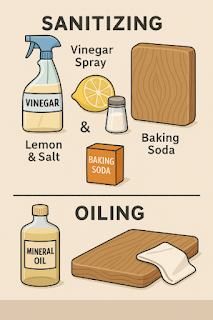
Properly Sanitizing and Oiling Wooden Cutting Boards: Natural Methods and What to Avoid

Image
Cutting boards are essential kitchen tools used daily, but many people overlook proper hygiene and maintenance—especially with wooden boards. Poor maintenance can lead to bacterial growth, foul odors, warping, and cracks. That’s why regular sanitizing and oiling are crucial. In this post, we’ll explore effective natural cleaning methods, proper oiling techniques, and common mistakes to avoid when caring for your wooden cutting board.     How Often Should You Sanitize Your Cutting Board? Because cutting boards absorb moisture and food particles during use—especially when cutting protein-rich items like meat or fish—sanitizing them regularly is vital. Here's a general maintenance schedule: Daily: Wash with mild soap and warm water, then dry immediately. Weekly: Disinfect with natural agents like vinegar or lemon with salt. Monthly: Deodorize using baking soda. 3 Natural Sanitizing Methods 1. Vinegar Spray Mix white vinegar and water in a 1:...

What Is Feudalism? Key Differences Between Chinese and European Systems

Image
The word "feudalism" appears frequently in history classes, but its meaning differs drastically between East and West. In the West, it refers to a contractual relationship between lords and vassals , while in China, it meant a decentralized system where the king granted land to relatives and loyal officials to rule various regions. In this post, we’ll explore the differences between European feudalism and Chinese feudalism (封建制) , focusing on their structure, philosophy, and historical contexts.     Feudalism in China: Zhou Dynasty’s Decentralized Governance In ancient China, feudalism (封建制) began under King Wu of the Zhou Dynasty, who stabilized the realm by granting territories to royal family members and meritorious subjects . These feudal lords (諸侯) enjoyed autonomy in their regions but were formally obligated to offer tribute and military aid to the Zhou king. Prominent feudal states: Lu, Song, Qi, Jin, Wei A layered hierarchy: Lords → Minist...